
05 · Service
Cabling & Bracing
A second century, engineered into the canopy.
Overview
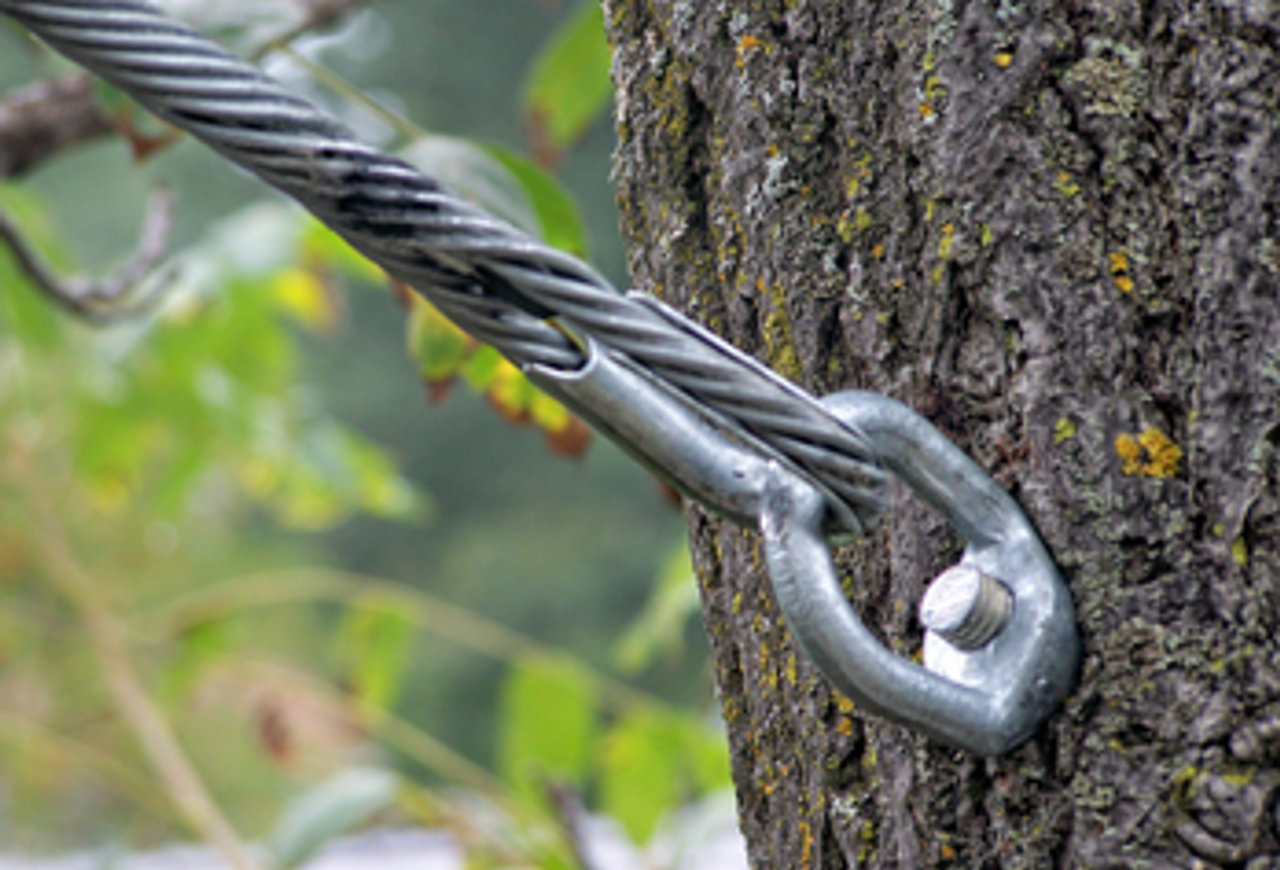
Cabling and bracing can prolong the life of a damaged tree or reduce the hazard of a potential one — by installing flexible cables or rigid rods at engineered support points high in the canopy.
Some trees are too significant — historic, sentimental, or structurally central to a landscape — to be lost to a single co-dominant union or weakened limb. Modern cabling systems redistribute load across the canopy, allowing the tree to continue growing safely.
We install both static (steel) and dynamic (synthetic rope) systems per ISA standards, and we follow up annually to inspect, tension, and document.
What's included
Every job, completely.
- Static steel and dynamic synthetic systems
- Threaded brace rods through unions
- Engineered placement per species and load
- Annual inspection and tension verification
- Documentation for HOAs and insurers
Our Process
Measured. Methodical. Documented.
Inspect
Resistograph and visual assessment of unions and limbs.
Engineer
Specify cable type, hardware, and anchor points.
Install
Climb-installed at engineered height, terminated to spec.
Monitor
Annual inspection, retensioning, and written report.
Frequently asked
Questions, answered.
Is the hardware visible?+
Cables sit high in the canopy and are nearly invisible from the ground. Hardware is non-corrosive.
How long do systems last?+
Properly installed steel cables last 15–20 years; synthetic systems are typically inspected every 3–5.
Will it harm the tree?+
No. Modern hardware is designed to allow the tree to grow around it without girdling.